
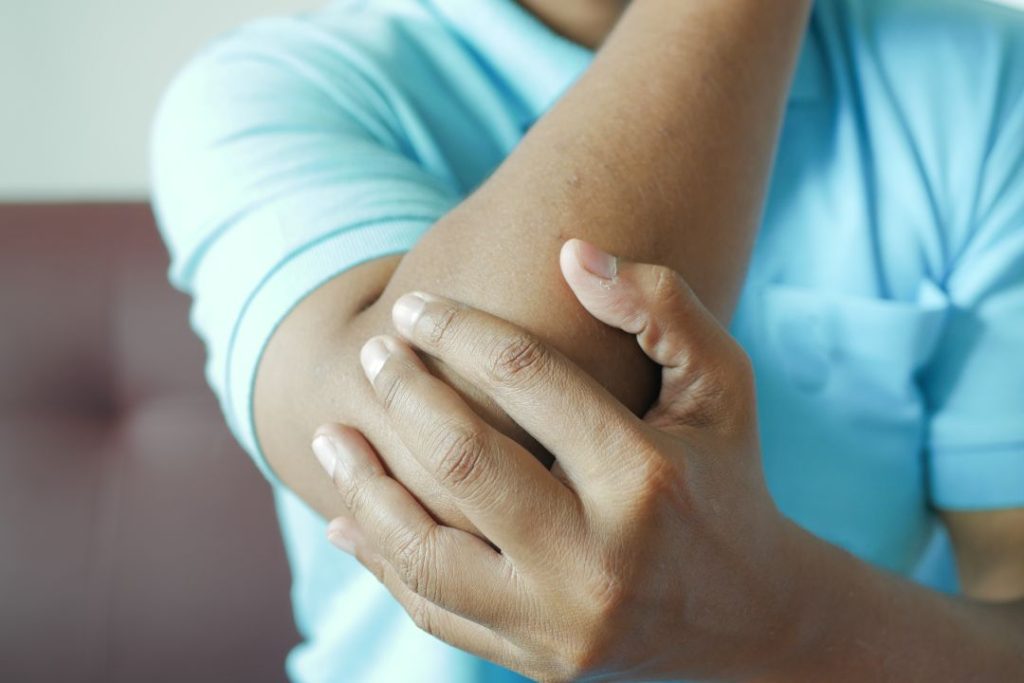
Tennis Elbow Treatment in Opelika When Gripping Hurts
Tennis elbow makes everyday activities painful. Shaking hands creates a sharp pain on the outside of your elbow. Lifting a coffee cup sends an ache down your forearm. Turning a doorknob, typing on a keyboard, or using tools at work all aggravate the same tender spot. You don’t even play tennis, but the pain won’t go away.
Since 1981, we’ve treated thousands of tennis elbow cases throughout East Alabama. Most people who develop tennis elbow never pick up a tennis racket. The condition comes from repetitive gripping, twisting, or lifting motions at work or during daily activities. The medical name is lateral epicondylitis—inflammation of the tendons that attach to the outside of your elbow. To get lasting relief, we need to reduce the inflammation, restore proper elbow mechanics, and address the muscle imbalances that created the problem.
What Causes Tennis Elbow
Tennis elbow happens when the tendons connecting your forearm muscles to the bony bump on the outside of your elbow become inflamed or develop small tears. These tendons—specifically the extensor carpi radialis brevis—control wrist extension and gripping. When you overuse them through repetitive motions, the tendons become irritated and painful.
Repetitive work activities are the most common cause around Opelika and Auburn. Assembly line work at the automotive plants, painting, plumbing, carpentry, typing, and any job requiring repeated gripping or wrist movements can create tennis elbow. Many of these are workers’ compensation injury treatment cases — the repetitive strain happens on the job and is covered under your employer’s insurance.
Poor technique during activities stresses the tendons unnecessarily. Gripping tools too tightly, using improper form when lifting, or maintaining awkward wrist positions while working all increase strain on the elbow tendons.
Sports and recreational activities contribute to tennis elbow beyond just tennis. Golf, bowling, weightlifting, and any sport involving gripping or swinging motions can inflame these tendons. Even yard work—raking leaves, using pruning shears, or operating power tools—can trigger the condition.
Age-related tendon degeneration makes tennis elbow more common after age thirty. As tendons lose flexibility and resilience with age, they’re more susceptible to injury from activities you’ve done for years without problems.
Muscle imbalances between your forearm flexors and extensors create uneven stress on the elbow tendons. Weak extensor muscles make the tendons work harder during gripping activities, increasing injury risk.
Neck and shoulder problems can contribute to tennis elbow. When nerves in your cervical spine are compressed or shoulder mechanics are poor, it can affect how your arm and elbow function, making tennis elbow more likely or harder to heal.
How We Diagnose Tennis Elbow
When you come in with elbow pain, we need to confirm it’s actually tennis elbow and not another condition like arthritis, nerve compression, or a more serious tendon tear. That starts with questions about your symptoms and activities. What movements make it hurt? When did the pain start? What do you do for work or recreation that involves your arms?
Physical examination includes specific tests for tennis elbow. Having you extend your wrist against resistance while we palpate the lateral epicondyle reproduces the characteristic pain. Testing grip strength often shows weakness on the affected side. We check your elbow range of motion and assess whether the joint itself is moving properly.
We also examine your neck and shoulder because problems in these areas often contribute to tennis elbow. Testing cervical spine mobility, checking for nerve compression, and assessing shoulder mechanics helps identify contributing factors that need to be addressed for complete healing.
Our on-site X-rays at our Gateway Drive office rule out bone problems like arthritis or calcium deposits in the tendon. While X-rays don’t show tendon inflammation directly, they help eliminate other causes of elbow pain. We read these images the same day.
For severe cases or when we suspect significant tendon tearing, our doctors use their auxiliary staff privileges at East Alabama Health to order MRI or ultrasound imaging. These show soft tissue in detail, revealing the extent of tendon damage and helping determine the best treatment approach.
Non-Surgical Tennis Elbow Treatment
Chiropractic care for tennis elbow addresses both the inflamed tendons and the biomechanical problems that caused the inflammation. This approach gives better, longer-lasting results than treatments focusing only on the painful area. Tennis elbow is one of several upper-extremity conditions we treat alongside carpal tunnel syndrome treatment and broader shoulder, knee, hip, ankle and wrist injuries — the same joint-focused approach applies throughout.
Elbow joint adjustments restore proper mechanics to the elbow itself. When the radius, ulna, or humerus shift slightly out of proper alignment—often from the repetitive stress that caused tennis elbow—it changes how forces distribute across the joint and tendons. Gentle adjustments correct these alignment problems, reducing stress on the inflamed tendons.
Wrist adjustments help because the muscles that attach to your lateral epicondyle control wrist motion. When wrist bones are misaligned, those muscles work harder and put extra stress on their tendon attachments at the elbow. Adjusting the wrist bones improves mechanics throughout the forearm.
Cervical spine and shoulder adjustments address contributing factors from above. If neck problems are affecting nerve function to your arm, or if shoulder dysfunction is creating compensatory stress on your elbow, treating these areas supports elbow healing.
Soft tissue therapy directly treats the inflamed tendons and tight forearm muscles. Cross-friction massage breaks up scar tissue in damaged tendons. Myofascial release techniques relax the chronically tight extensor muscles. Trigger point therapy addresses specific areas of muscle tension that refer pain to the elbow.
We also use therapies that reduce inflammation and promote tendon healing. Ultrasound therapy penetrates deep into the tendon tissue, promoting cellular repair and breaking up scar tissue. Cold laser therapy decreases inflammation without medications. Electrical muscle stimulation reduces muscle tension in the forearm. Ice therapy manages acute inflammation, especially after activities that aggravate the condition.
Stretching exercises for your forearm muscles prevent tightness from pulling on the healing tendons. We teach specific stretches for both your flexor and extensor muscles that you perform several times daily.
Strengthening exercises rebuild tendon resilience once acute inflammation decreases. Eccentric exercises—where the muscle lengthens while contracting—are particularly effective for tendon healing. We start with very light resistance and gradually progress as your tendon heals and strengthens.
Bracing provides support during healing. A counterforce brace worn just below the elbow reduces stress on the lateral epicondyle during activities. This allows you to function at work and home while your tendon heals.
Our medical team can provide additional options when needed. Dr. Ronald J. Herring and nurse practitioner Jeff Sanders can prescribe anti-inflammatory medications for severe inflammation. While we generally avoid cortisone injections because they can weaken tendons long-term, they may be appropriate for stubborn cases that haven’t responded to conservative treatment.
Modifying Activities During Healing
Tennis elbow heals slowly because the affected tendons have limited blood supply. Complete healing typically takes several weeks to several months depending on severity. During this time, activity modification is essential.
We don’t tell you to stop using your arm completely—that causes weakness and stiffness. Instead, we help you identify which specific activities aggravate your condition and how to modify them. Using larger handles on tools reduces grip stress. Taking frequent breaks during repetitive activities prevents overuse. Alternating hands for tasks when possible gives the affected arm rest.
Proper technique makes a significant difference. We provide guidance on ergonomics at work, proper lifting mechanics, and how to perform your job duties with less elbow stress. Many patients can continue working with simple modifications while their tendon heals.
Gradual return to full activity prevents re-injury. As your pain decreases and strength improves, we progressively increase the challenge of your exercises and the demands you place on your elbow. Rushing back to full activity too quickly often leads to setbacks.
Preventing Tennis Elbow from Returning
Getting rid of current tennis elbow is important, but preventing it from coming back matters just as much. That means addressing why your tendons became inflamed in the first place.
Strengthening your forearm extensor muscles builds the capacity to handle repetitive gripping and lifting without tendon breakdown. We provide a home exercise program that continues after your pain resolves, maintaining the strength that protects against recurrence.
Balancing strength between your flexors and extensors prevents the muscle imbalances that contribute to tennis elbow. Most people have much stronger flexors than extensors—we correct this imbalance through targeted exercises.
Proper warm-up before activities that stress your elbows prepares the tendons for work. Simple wrist circles, gentle stretching, and progressive loading before heavy gripping activities all help.
Equipment modifications reduce elbow stress during work and recreation. Larger grip diameters, ergonomic tool handles, and proper equipment setup all make a difference for people whose jobs or hobbies put them at risk.
Technique coaching for sports or work activities ensures you’re not creating unnecessary stress on your elbows through poor form.
Why Opelika and Auburn Trust Our Tennis Elbow Treatment
Since 1981, we’ve treated tennis elbow in factory workers, office workers, athletes, tradespeople, and everyone in between throughout East Alabama. Both Dr. Ron and Dr. Rod Herring earned Young Chiropractor of the Year awards from the Alabama State Chiropractic Association—Dr. Ron in 1989 and Dr. Rod in 1996. Dr. Rod later received Chiropractor of the Year in 2019.
Our doctors hold auxiliary staff privileges at East Alabama Health, which allows us to order advanced imaging and coordinate with orthopedic specialists when tennis elbow cases need evaluation beyond our office capabilities.
We’ve treated everyone from Auburn University athletes to mechanics at local shops, assembly line workers from the automotive plants, and office workers dealing with repetitive strain injuries. Unlike many practices, we don’t require contracts. You pay by the visit, and we accept most insurance including BCBS, Aetna, Humana, United Healthcare, and Medicare. Workers’ compensation cases are welcome for job-related tennis elbow.
Our hundreds of five-star reviews reflect patients who got back to work and activities without elbow pain.
Ready to Stop Your Tennis Elbow Pain?
You don’t have to live with chronic elbow pain or accept cortisone shots and surgery as your only options. Effective conservative treatment for tennis elbow is available right here in Opelika. We’re located at 2011 Gateway Drive, just minutes from Tiger Town, the Auburn Mall, and Saugahatchee Country Club.
Our office hours:
Monday through Friday: 8am–12pm and 1:30pm–5:30pm
Saturday: 8am–12pm
Call us at (334) 745-5321 to schedule your first appointment. Our staff will verify your insurance coverage and answer any questions before you come in.
Serving patients throughout East Alabama, including Opelika, Auburn, Phenix City, Valley, LaFayette, Dadeville, Beulah, Smiths Station, and surrounding communities. Same-day X-rays available. No contracts required.