
Sports Injury Treatment in Opelika Getting Athletes Back in the Game
Getting injured during competition or training is frustrating. You’ve worked hard to build your skills and conditioning, and now you’re on the sidelines watching your teammates play. You’re worried about losing fitness, missing games, or whether the injury will heal correctly. You want to get back to your sport, but you want to return safely without risking re-injury.
Since 1981, we’ve treated thousands of athletic injuries throughout East Alabama. We’ve worked with Auburn University athletes, high school teams, weekend warriors, and everyone in between. What makes our approach different is that we don’t just treat the injury—we address the biomechanical issues that contributed to it and prepare you to return to competition stronger and less likely to get hurt again.
Common Sports Injuries We Treat
Ankle sprains are among the most common sports injuries we see from basketball, football, soccer, and track athletes around Opelika and Auburn. When you roll your ankle, you strain or tear the ligaments on the outside of the joint. Without proper treatment, ankle sprains often become chronic problems with repeated injuries. These are part of the broader shoulder, knee, hip, ankle and wrist injuries we treat using the same joint-focused, whole-kinetic-chain approach.
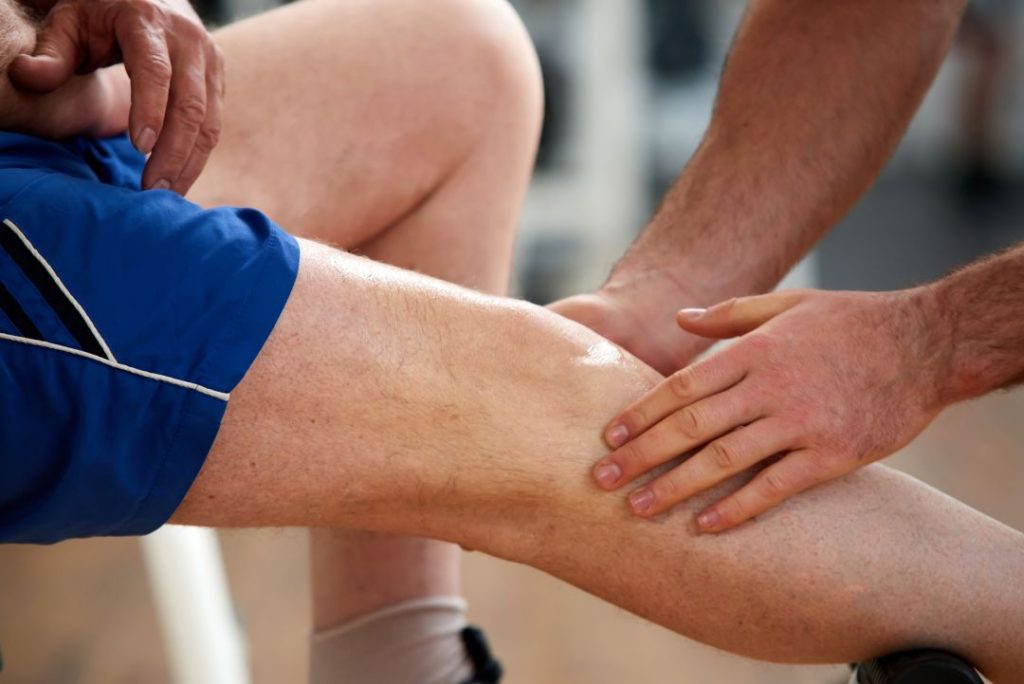
Knee injuries range from minor sprains to serious ligament damage. ACL, MCL, and meniscus injuries require careful management to heal properly. Patellar tendonitis and runner’s knee are common overuse injuries in athletes who jump or run extensively.
Shoulder injuries affect baseball players, swimmers, volleyball players, and anyone whose sport involves overhead motion. Rotator cuff strains, impingement syndrome, and labral injuries can sideline athletes for weeks or months without proper treatment.
Hamstring strains plague runners, soccer players, and track athletes. These injuries happen suddenly during sprinting or kicking and tend to recur if not rehabilitated completely.
Lower back pain affects athletes in nearly every sport. Repetitive rotation in golf and baseball, impact in football, or hyperextension in gymnastics all stress the lumbar spine. Athletes with sciatica from sport-related disc injuries often find the same decompression and adjustment approach resolves their leg pain alongside the back injury.
Shin splints and stress fractures develop in runners and athletes who train on hard surfaces. These overuse injuries result from doing too much too soon without adequate recovery.
Tennis elbow and golfer’s elbow create pain in athletes who grip and swing repeatedly. These tendon injuries need specific treatment to heal properly.
Concussions require careful management and gradual return-to-play protocols. We work with team physicians and athletic trainers to ensure safe recovery from head injuries.
Overuse injuries develop when training volume or intensity increases too quickly. Tendonitis, stress reactions, and muscle strains often result from inadequate recovery between workouts. Foot overuse conditions like plantar fasciitis are among the most common complaints we see in runners and athletes who train on hard surfaces.
Why Athletes Need Specialized Sports Injury Treatment
Athletic injuries differ from everyday injuries in important ways. Athletes need to return to competition quickly but safely. They need to maintain fitness during recovery. And they need to address the biomechanical factors that contributed to injury to prevent recurrence.
Simply resting until pain goes away doesn’t prepare you to return to high-level performance. Muscles weaken, range of motion decreases, and proprioception—your body’s awareness of position and movement—deteriorates during inactivity. You need active rehabilitation that maintains fitness while allowing injured tissues to heal.
Biomechanical assessment identifies movement patterns or structural issues that contributed to your injury. Muscle imbalances, poor technique, joint restrictions, or training errors all increase injury risk. Correcting these factors prevents the same injury from happening again when you return to sport.
Sport-specific rehabilitation prepares you for the actual demands of competition. Generic exercises don’t replicate the forces, speeds, and movement patterns your sport requires. We design rehab programs that progressively build the strength, flexibility, and coordination needed for your specific athletic demands.
How We Diagnose and Assess Sports Injuries
When you come in with a sports injury, we need to understand not just what’s injured but why it happened. That starts with questions about the injury mechanism. How did it happen? What were you doing? Have you had similar injuries before? What training have you been doing?
Physical examination assesses the injured area thoroughly. We test ligament stability, check range of motion, identify muscle weakness, and palpate for areas of inflammation or damage. Special orthopedic tests help differentiate between different types of injuries.
Functional movement screening reveals biomechanical problems that contributed to your injury. We assess how you squat, lunge, balance on one leg, and perform movements specific to your sport. Identifying movement dysfunction guides treatment and helps prevent future injuries.
Our on-site X-rays at our Gateway Drive office rule out fractures or identify structural problems. We read these images the same day so treatment can begin immediately.
For suspected soft tissue injuries like ligament tears or muscle strains, our doctors use their auxiliary staff privileges at East Alabama Health to order MRI imaging. Understanding the full extent of tissue damage helps us create appropriate treatment timelines and return-to-play protocols.
Gait analysis for runners identifies biomechanical issues contributing to overuse injuries. Watching how you run reveals overpronation, leg length differences, or movement compensations that stress specific tissues.
Treatment for Sports Injuries
Chiropractic care for athletic injuries addresses both the damaged tissues and the biomechanical factors that contributed to injury. This approach helps you heal faster and return to sport with less re-injury risk.
Joint adjustments restore proper mechanics to injured areas. Ankle sprains often leave small bones shifted out of position. Knee injuries can affect patella tracking. Shoulder injuries create dysfunction throughout the shoulder complex. Adjustments correct these mechanical problems, supporting tissue healing and restoring normal movement.
Spinal adjustments are important for athletes even when the primary injury isn’t in the spine. Your spine controls nerve function to your entire body. Optimizing spinal function enhances healing, improves coordination, and supports peak athletic performance.
Soft tissue therapy treats the muscle, tendon, and ligament damage common in sports injuries. Instrument-assisted soft tissue mobilization breaks up scar tissue. Active Release Technique addresses adhesions that limit movement. Myofascial release restores normal tissue flexibility.
Rehabilitation exercises progress through stages as you heal. Early rehab focuses on maintaining range of motion and preventing muscle loss. Intermediate rehab builds strength and stability. Advanced rehab includes sport-specific movements, plyometrics, and agility drills that prepare you for competition demands.
Proprioceptive training rebuilds your body’s awareness of position and movement after injury. Balance exercises, unstable surface training, and reactive drills all improve neuromuscular control and reduce re-injury risk.
We also use therapies that speed healing. Electrical muscle stimulation reduces swelling and prevents muscle atrophy. Ultrasound therapy promotes tissue repair. Cold laser therapy decreases inflammation and accelerates healing. Ice and compression manage acute inflammation after injury.
Kinesiology taping provides support without restricting movement. We use tape to offload injured tissues, provide proprioceptive feedback, and reduce swelling during the healing process.
Our medical team can provide additional options when needed. Dr. Ronald J. Herring and nurse practitioner Jeff Sanders can prescribe anti-inflammatory medications for severe inflammation or provide medical clearance documentation for return to play.
Return-to-Play Protocols
Getting athletes back to competition safely requires systematic progression through return-to-play stages. Rushing back too quickly risks re-injury. Staying out longer than necessary causes deconditioning and missed opportunities.
We use objective criteria to progress through rehabilitation stages. Can you perform functional movements without pain? Have you regained full range of motion? Is your strength at least 90% of the uninjured side? Can you complete sport-specific drills without compensation?
Gradual return to sport starts with individual skill work at reduced intensity. As tissues continue healing and function improves, we progress to full-speed individual work, then limited practice participation, then full practice, and finally game competition.
Communication with coaches and athletic trainers ensures everyone understands your status and any temporary restrictions. We provide written clearance documentation when you’re ready to return to full participation.
Injury Prevention and Performance Optimization
Working with athletes doesn’t end when injuries heal. Many athletes continue care to prevent future injuries and optimize performance.
Addressing biomechanical issues before they cause injury makes sense for serious athletes. Correcting movement dysfunction, improving flexibility, strengthening weak links, and optimizing joint mechanics all reduce injury risk.
Regular maintenance adjustments help athletes recover from the repetitive stress of training and competition. Many college and professional athletes receive chiropractic care regularly as part of their performance program.
Pre-season preparation gets athletes ready for the demands of their sport. Addressing any lingering issues from the previous season and building the strength and mobility needed for upcoming competition helps athletes start strong and stay healthy.
Why Athletes and Teams Trust Herring Spine & Rehab
Since 1981, we’ve worked with athletes from every sport and every level throughout East Alabama. Both Dr. Ron and Dr. Rod Herring earned Young Chiropractor of the Year awards from the Alabama State Chiropractic Association—Dr. Ron in 1989 and Dr. Rod in 1996. Dr. Rod later received Chiropractor of the Year in 2019.
Our doctors hold auxiliary staff privileges at East Alabama Health, which allows us to order advanced imaging and coordinate with sports medicine physicians and orthopedic surgeons when injuries require medical management beyond our office capabilities.
We’ve treated everyone from Auburn University athletes to high school teams throughout the area, club sport athletes, weekend warriors, and youth sport participants. We understand the unique pressures athletes face—the desire to return quickly, the fear of losing playing time, and the importance of healing correctly.
Unlike many practices, we don’t require contracts. You pay by the visit, and we accept most insurance including BCBS, Aetna, Humana, United Healthcare, and Medicare. Our hundreds of five-star reviews reflect athletes who got back to competition safely and performed better than before their injury.
Ready to Recover from Your Sports Injury?
You don’t have to sit on the sidelines longer than necessary or risk re-injury by returning too soon. Expert sports injury treatment is available right here in Opelika. We’re located at 2011 Gateway Drive, just minutes from Tiger Town, Auburn University, and local high schools throughout the area.
Our office hours:
Monday through Friday: 8am–12pm and 1:30pm–5:30pm
Saturday: 8am–12pm
Call us at (334) 745-5321 to schedule your first appointment. Our staff will verify your insurance coverage and answer any questions before you come in.
Serving patients throughout East Alabama, including Opelika, Auburn, Phenix City, Valley, LaFayette, Dadeville, Beulah, Smiths Station, and surrounding communities. Same-day X-rays available. No contracts required.